


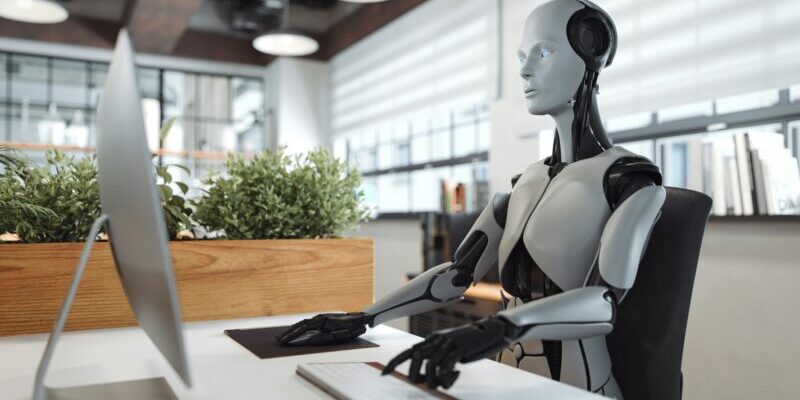
AI trading models that make decisions solely based on data should be more accurate and produce better results than humans. But that’s not necessarily the case.
Hedge fund managers who are responsible for billions of dollars rely on high probability trades to be successful. To achieve that, many prefer to take the human element completely out of the decision-making process.
Replacing emotions with an algorithm is often less risky. Makes sense, right? Emotions run high when the market is moving in big waves. Fear and greed can drive us to make rash decisions that are not always backed by the data or constrained by solid risk management principles.
But can an algorithm produce better returns than a human who is reacting to and even anticipating the next price move?
Not necessarily.
Both an algorithm and human produce strong results when they use price, fundamentals, and technical and sentiment indicators to make trading decisions. But both must also respond quickly when the trading environment changes.
Humans may be slow to believe what they’re seeing. AI-model inputs may be slow to respond too, depending on their inputs.
I’m not anti-AI, but I am also not convinced AI will outperform the market.
First, nothing takes the place of human experience. The wisdom you gain watching and analyzing indicators and understanding weird quirks of market action will never replace code.
Second, I have no doubt you have more flexibility when it comes to trading. Even if you are late to enter or leave a trade, you remain in the driver’s seat. You make the decision.
It’ll be interesting to see whether AI or humans are more accurate as more fund managers and retail investors turn to Gemini, Claude, and AI tools specifically made for traders. For now, I’ll continue to rely on my decades of experience and ability to consistently outperform the markets. If it ain’t broke….
This free guide will teach you how.