



Over the past few weeks, the bond market’s MOVE Index has spiked higher for two reasons. One, inflation may worsen, and two, Treasury bonds are in excess supply.
The MOVE Index (Merrill Lynch Option Volatility Estimate Index) measures the implied yield volatility of US Treasuries over the next month. Think of it like the VIX for bonds, measuring bond market anxiety.
This anxiety tends to rise when bond market investors are worried. They are a nervous bunch, by the way, and have predicted seven of the last two recessions.
The MOVE Index’s chart is very concerning right now. As you can see below, it rose up some 50% in a few weeks. That is a HOT move. The implied move in rates continues to be elevated; the bond market is not comfortable with this situation.
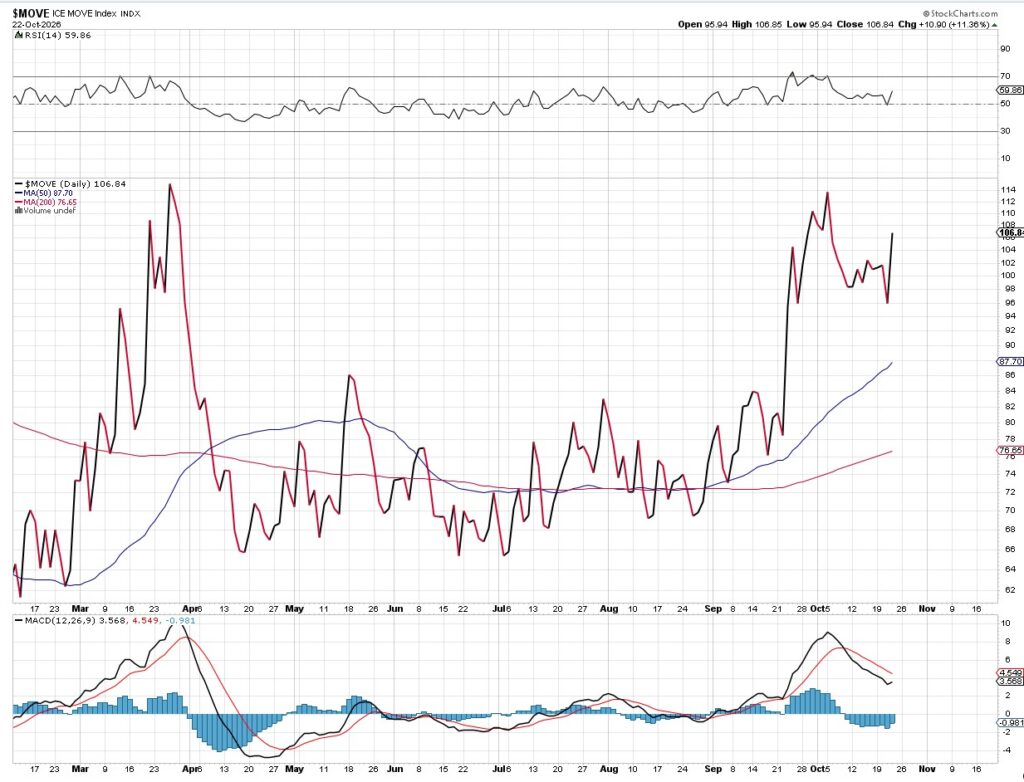
What the big spike in the MOVE Index means
Higher inflation is expected
The bond market, interest rates, and inflation are tightly linked. Rising interest rates tell us inflation levels are too high, economic health is shaky, and overall stock market performance could turn bearish. Bond market investors abhor inflation. They will sell bonds in a flash as prices rise.
Our best tool for getting inflation under control and generating some stability in bonds comes via the Federal Reserve. By raising interest rates, they can blunt inflation. This is considered a hawkish policy and has historically worked to break the back of inflation. The Fed raised the Fed Funds rate in September, but not many more are being priced into the futures markets – just three more by next summer.
There are multiple signs that inflation could get worse. Core inflation is roughly 3% but well above the Fed’s target of 2%. However, the Producer Prices Index (PPI) came in last month at a scorching 15.1% annualized rate. That is higher than anything we saw during Covid, when money supply increased and a buying frenzy ensued.
Treasuries are in excess supply
For years, countries have bought up US Treasuries as a safe investment, but today many are scaling back those purchases. The government is $42 trillion in debt and issuing large numbers of bonds each week to cover debt payments. If buyers are not present, prices will fall and yields will rise, making the payback on these bonds much more expensive. Current yield levels are very high – they have not been at these levels in two decades – and investors are worried they may get out of control.
We talk a lot about watching equity market volatility, but bond market volatility is especially important to track during times of instability. Keep your eye on the MOVE Index. I sure will.